

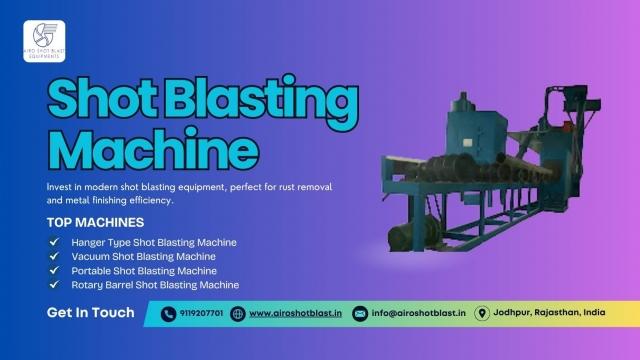
As we advance into 2025-26, the industrial landscape is witnessing a notable shift in the economics of surface-preparation equipment. In particular, shot blasting machines — once viewed as straightforward capital purchases — are now subject to complex pricing dynamics shaped by raw-material costs, global supply-chain pressures, evolving regulatory frameworks, and demand fluctuations. At Airo Shot Blast, we closely monitor these trends to offer our clients clarity and value. This article explores the key factors influencing shot blasting machine prices in 2026 and outlines what buyers should expect and how to make strategic decisions.
Current Baseline: What 2024 Pricing Looked Like
Before evaluating 2025-26 shifts, it helps to understand where pricing stood at the end of 2024. For a standard PLC-controlled, mid-capacity shot blasting machine with moderate automation and standard manganese-steel liners, the typical manufacture-and-delivery cost ranged in a certain standard band (depending on capacity, configuration, and after-sales support). International import units with advanced automation and premium wear-resistant parts were priced significantly higher — often at a premium of 25–40 % over domestic equivalents.
This baseline served industries such as automotive components, heavy engineering, and steel fabrication across India and other emerging markets. However — several influencing factors are now pushing that baseline upwards or causing increased variance across brands.
Key Drivers Impacting Shot Blasting Machine Prices in 2025-26
Raw Material Price Fluctuations
-
Steel and Manganese Alloys: The core structure, wear-resistant liners, turbines, and other critical components rely heavily on steel and high-manganese alloys. In 2025-26, global steel prices have remained volatile due to regional production cuts, supply constraints in seaborne ore shipments, and rising demand across construction and manufacturing.
-
Alloying Elements: Manganese, chromium, and other alloying metals used for blast-liner hardness have seen price hikes due to reduced mining output and export restrictions in certain countries.
-
Impact on Manufacturing Cost: As raw-material costs climb, manufacturers factoring in higher procurement costs must adjust final equipment prices. Even for domestic concerns, this increase can be between 10–18 % over 2024, depending on machine capacity and the alloy grade used.
Energy, Fuel, and Power Costs
-
Electricity and Diesel: Operating heavy fabrication shops involves substantial power consumption — electric welding, machining, surface preparation, etc. As power tariffs rise globally and locally, manufacturers of heavier machines face increased production costs. Additionally, diesel costs (for transport of materials and logistics) have surged, adding to overhead.
-
Turbine Testing and Burn-in Costs: Shot blaster turbines often undergo high-speed testing post fabrication, which consumes significant energy. Elevated energy prices directly translate to higher per-unit manufacturing costs, passed down to buyers.
Supply Chain Disruptions and Freight Costs
-
Global Logistics Pressure: International freight costs remain high in 2025-26. Shipping container shortages, port delays, and higher fuel costs have made importing components or complete machines more expensive. Even raw-material imports for domestic fabrication are affected.
-
Local Logistics Inflation: Within India, rising fuel costs, freight demand, and strained transportation networks have increased inland delivery charges by 15–25%. For heavy equipment like shot blast machines, transport can be a significant portion of landed cost.
Evolving Regulatory and Environmental Standards
-
Dust Emission & Pollution Control Laws: Several states in India and other manufacturing hubs worldwide have tightened norms on dust emission, worker safety, noise, and waste handling. Compliance often requires improved dust-collection systems, soundproof enclosures, and better filtration — all of which add to machine cost.
-
Energy Efficiency Standards: New regulations push for energy-efficient motors, reduced power consumption, and low-emission apparatus. Incorporating energy-efficient turbines, variable-frequency drives (VFD), and high-efficiency motors adds cost but also long-term savings.
Technological Upgrades and Automation Demand
-
Rising Demand for PLC & Automation: 2025-26 sees heightened demand for PLC-integrated shot blasters, real-time monitoring, data logging, predictive maintenance features, and remote diagnostics — especially from automotive, aerospace, and heavy machinery sectors. These smart features necessitate better electronics, high-quality PLCs, HMI panels, sensors, and control systems.
-
Premium Wear-Resistant Parts: As customers expect longer downtime intervals and less frequent maintenance, there is a growing demand for premium liners (e.g., alloy steel, manganese-chromium composites), advanced blast turbines, and heavier build frames. These upgrades push the pricing bracket upward.
-
Customization Requests: Manufacturers increasingly request customized layouts — such as hanger-type, spinner hanger, tumble blast, or conveyor-based systems — tailored to particular production workflows. Custom engineering, designing, and fabricating add to costs and lead times.
Currency Fluctuation & Inflation Pressures
-
Import Dependency: For imported components — such as foreign-brand PLCs, bearings, or specialty alloys — currency depreciation against major currencies increases costs. Indian rupee volatility in 2025-26 has added approximately 8–12 % to cost for imported parts compared to last year.
-
General Inflation: Rising wages, material overheads, and increased cost of living impacts labor charges in fabrication shops, packaging, and after-sale service — all rolled into final machine pricing.
Changes in Demand & Market Dynamics
-
Higher Demand from Infrastructure & Heavy Engineering: As government-led infrastructure projects and industrial expansion accelerate, demand for shot blasting equipment has increased. This pushes manufacturers to allocate capacity, which may lead to lead-time extensions and price premiums.
-
Shortage of High-Quality Domestic Manufacturers: Not all domestic producers can meet advanced wear-resistant standards. As demand for premium build and automation increases, fewer vendors meet the specification — allowing those who do to command higher prices.
-
Delayed Manufacturing Orders: Many buyers are placing orders with longer lead times (6–9 months) anticipating price inflation or raw-material squeeze, which further influences pricing strategy.
What This Means for Different Tiers of Shot Blasting Machines
Entry-Level Machines
These remain fairly affordable but see a nominal price increase (5–8 %) over 2024. Basic machines with minimal automation, standard wear parts, and no advanced dust or energy-efficiency systems are more accessible — but they may not meet stricter environmental or industrial-quality standards.
Mid-Range PLC-Automated Machines
Expect a sharper increase — roughly 12–20 % — because most of the cost pressures described (raw material, energy, regulatory compliance, PLC and automation components) apply here. Delivery time may also lengthen due to greater demand and capacity constraints.
High-End, Fully Automated, Custom Machines
For premium-grade machines — featuring high-grade alloys, full automation with data logging, energy-efficient turbines, top dust collectors, and custom configurations — price increases may range from 18% up to 25–30%, depending on customization, aftermarket support, and automation level. For heavily customized or export-grade machines, increases could go even higher.
Read More - Shot Blasting Machine Manufacturers
What Buyers Should Do in 2025-26 to Get Best Value
Plan Ahead and Lock-In Prices
If your production timeline allows, placing orders early in the year (Q1–Q2) can help avoid late-year inflation-driven surcharges. Early commitment gives manufacturers breathing room to procure raw materials before further price hikes.
Specify Precise Requirements to Avoid Costly Customizations
Provide clear specifications upfront: conveyor type, shot media (steel shot or grit), part size/shape, automation level, dust disposal norms, required throughput. Vague requirements often lead to over-engineering — and inflated costs.
Also Check - https://yashk4875.livepositively.com/shot-blasting-machine-buyeraos-roadmap-for-first-time-industrial-users/
Consider Total Cost of Ownership (TCO), Not Just Initial Price
Machines with energy-efficient turbines, upgraded wear materials, and efficient abrasive recycling may cost more upfront. But over 3–5 years, reduced downtime, lower abrasive consumption, and less frequent maintenance can offset the higher initial outlay.
Explore Local Manufacturing & Parts Supply
Where possible, choose domestically manufactured machines that source parts locally. This reduces exposure to currency fluctuations, long lead times, and expensive imported spares. Also consider manufacturers that offer timely spare parts and support.
Negotiate Package Deals — Supply + Installation + After-Sales
Given rising freight, energy, and logistics costs, negotiating a full-service package (installation, training, spare-parts kits, maintenance support) can offer better long-term value. Some manufacturers provide discounted retainers or bundled prices that mitigate future inflation risks.
Why Airo Shot Blast Offers Strong Price-Performance Balance in 2025-26
At Airo Shot Blast, our R&D and procurement teams have taken proactive measures to buffer these cost pressures — while still delivering high-quality machines:
-
Bulk procurement of high-grade manganese steel and alloy materials to hedge raw material inflation.
-
Use of efficient European-standard turbines and energy-optimizing drives to reduce operational power cost.
-
Integration of domestic parts wherever possible, reducing import dependency and currency risk.
-
Flexible build options: standard, semi-custom, and fully custom configurations to suit diverse budgets.
-
Transparent total cost of ownership analysis for clients, highlighting long-term savings on energy, abrasive, and maintenance compared to entry-level machines.
These steps allow us to maintain a competitive price pool for 2025-26 — even as macroeconomic headwinds push many suppliers toward higher mark-ups.
What to Expect in the Coming Months
-
Raw-material costs may stabilize if global supply chains ease, leading to potential price stabilization during late 2025-26.
-
Regulatory pressure on emissions and workplace safety may tighten further in export-oriented industries, raising demand for higher-spec dust-collection and filtration systems.
-
Demand from heavy industries — steel, shipbuilding, rail, infrastructure — is likely to rise, keeping demand for shot blasting machines high and maintaining upward price pressure.
-
Technological advancement in sensors, predictive maintenance, and data logging may become standard rather than premium — pushing mid-range machines upward in specs and price.
Read More - Shot Blasting Machine Price in India
Final Thoughts
2025-26 marks a pivotal year for shot blasting equipment pricing. Multiple global and domestic factors converge to push costs upward, especially for mid-to-high-end PLC automated machines. However, with careful planning, precise requirement definition, and focus on long-term operational savings, buyers can still secure valuable machines without overpaying.
At Airo Shot Blast, we remain committed to delivering machines that balance cost, quality, automation, and durability — helping manufacturers navigate 2025-26's evolving market wisely. For companies seeking a competitive edge in surface preparation, choosing the right time and the right machine could make a decisive difference between short-term savings and long-term operational success.